Shiny, plump spheres nestled together advertising their juicy sweetness. The ripe dark berries on the ends of the brambles stand out in the late summer light, making sure we leave the hard red ones behind for next week. I now know, but don’t always follow, that even if those that have turned black don’t yield with a gentle pull, they should also be left. Often it’s too tempting though and the risk of bitterness worth it.
I needed some green therapy today and the fluffy one would have melted if we’d gone to the beach so we headed to the woods.
I wasn’t quite expecting it still to be this green. The canopy has fully closed in and it wraps you in a gentle green haze. The ancient beeches create an aisle, ushering you down their tunnel.
After a while, I had tuned in and slowed down. The fairies (aka flies) dance in the sunbeams and the butterflies have their territorial battles just above the undergrowth.
Even warriors need a rest after battles.
I consider which trees to hug, you have to hug trees! Some just ask to be gazed at, marvelling at their limbs reaching, twisting up to the sky, giving me a crick in my neck.
One, unseen by the others hurrying past, shows it’s face. Slightly menacing? Or is that just me?
The other face I found definitely brought a smile to my face, pleased that others, possibly children are enjoying and connecting with this wonderful place.
I’ve just spent a few lovely days of noticing nature in Norfolk. I’ll be honest, none of us knew what to expect and we usually head for more upland areas. Yes, it is flat, but at the moment that is perfect for me. What pleasantly surprised me was the abundance of green and varied scenery – woodland, meadows, wetlands and of course the broads. As some of my favourite nature writers, Emma Mitchell, Simon Barnes and Mark Cocker write so vividly about their home patches I should have known this, but I am now converted. (Do go and check their writing out, such eloquent studies of our wonderful native landscapes. )
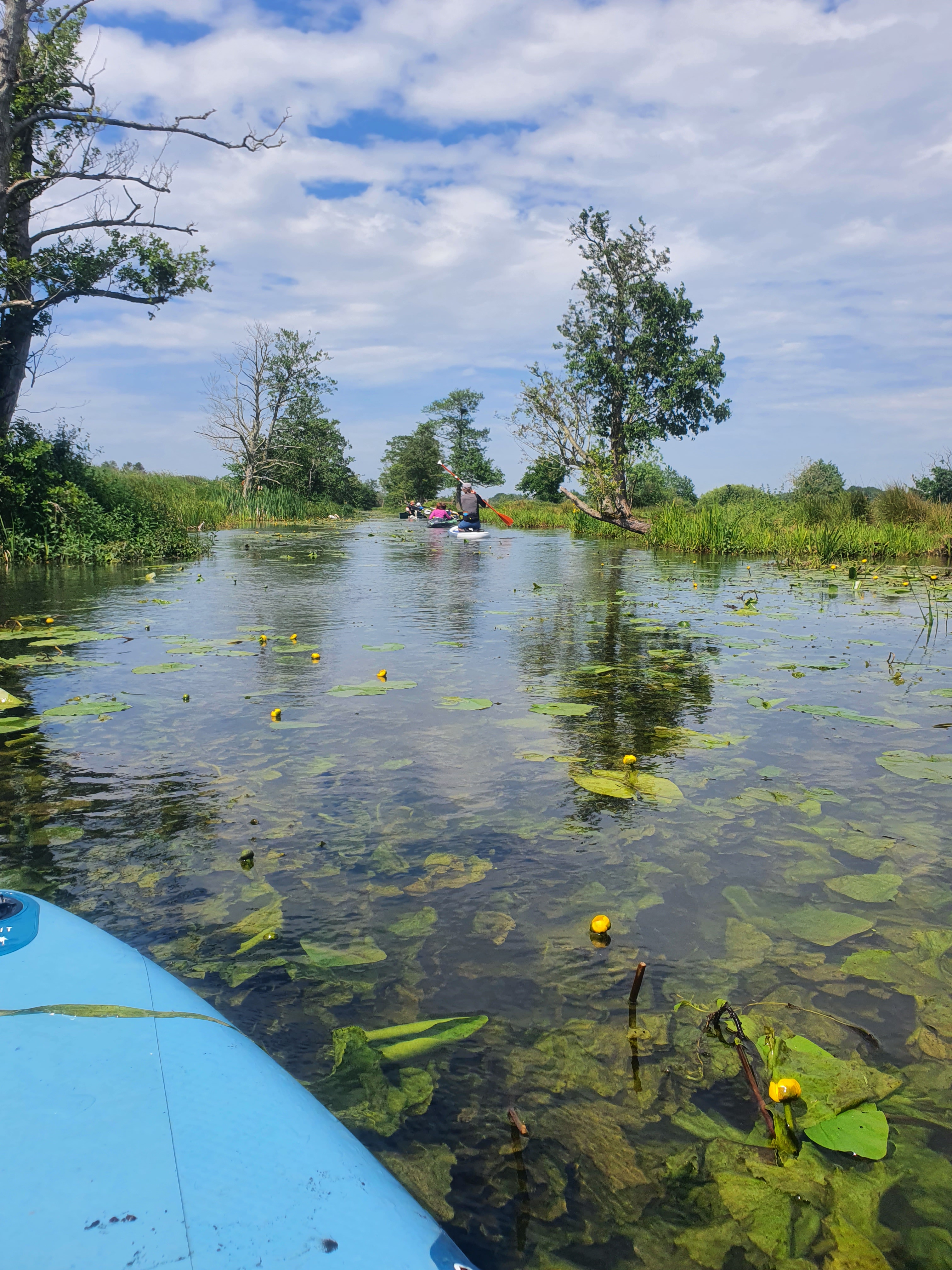
Paddling on the North Walsham and Dilham canal
The slow nature of our activities gave lots of opportunities for noticing the smaller things too. As the grasses along the canal waved in the breeze, the damselflies skittering amongst them, occasionally checking out my sup. They were jewels glittering in the sun, blues, greens and reds. Impossible to photograph until the last day when it was dull and very windy and I found this one hiding in the grass.
Banded demoiselle I believe
On the canal the going was occasionally impeded by the thick stems and old leaves of water lilies getting caught on our keels. But the clear water, so rare in Sussex, meant I could see the flower stalks reaching up to escape the water. Once there, the perfect tight sphere slowly started opening into a buttercup like flower.
The other wonderful thing about so much time spent fully immersed in nature (we were camping) is the birds. From our camp chairs we saw herons commuting, listened to constant song thrush territory defence and woke to the dawn chorus. A buzzard nearly won the battle of the skies after being mobbed by three crows, but decided to let them win that time. At one particular narrow, reed lined section of canal, whether walking or paddling a bird shouted it’s displeasure at our being vaguely near it. I think it may have been a sedge warbler, but as they don’t commonly visit suburban sussex gardens I really can’t be sure! I did teach the children the call of a chiff chaff though and actually got them to be silent long enough to hear a far off cuckoo. I can see why some of my favourite nature writers have so much to write about living in East Anglia.
There were also, thankfully, spots with deep enough water for a swim.
So, yes, the Broads may be an entirely man made and maintained landscape, but it seems, from my limited knowledge and experience, that nature is thriving and its a great place to be immersed in it. All of us left feeling refreshed and revived.
I’ve been resting my eyes alot lately, mostly under the duvet in bed, but also, in the lush green foliage that is everywhere at the moment.
Usually, I am all about the flowers, fidgety for my garden to get onto the bright and blousey stage. I remember a segment on gardener’s world last year from a garden that was almost entirely foliage and I just didn’t get it. Yes I love and know the importance of texture and different shapes but I thought it at least needed some white flowers.
But at the moment, I’m finding calm and rest for my brain in green. The yha room we stayed in at the weekend had huge floor to ceiling windows looking out into lush green Cumbrian woodland. So I deliberately chose the bunkbed where I could see it from my pillow. Perfect for afternoon rests. The ever present song thrush was the cherry on the top. I just sat and gazed, not even looked, just let my eyes gently rest on the haze.
Water is of course crucial to this colour scheme. The dry spell of late winter and early spring which at least enabled my plants to get going without the army of snails that usually decimate them, has now been pushed aside by April showers in May. As well as nourishing the roots, the rain cleans everything so even under grey skies the green shines out. Even the rivers become green, not from some evil invasive weed but a reflection of its canopy.
Today I sat on the resting arm of an old tree under its umbrella of green leaves fluttering in the wind, masquerading as butterflies. And I felt calm.
Usually I am close up, low down, camera in hand, noticing the little things, whether flora or fauna (I’m still perfecting my creeping up on butterflies skill for this season).
But, in the last couple of days, I’ve found myself sitting with a different experience. The bigger picture, the wide open spaces, the distant horizon. This is not my usual view, obviously its there and I look at it, but as you’ll know if you follow my art and photography in Instagram, I am usually about the details. Maybe it’s because I haven’t yet managed to paint a landscape I’m happy with!
It started on the beach, I didn’t go in because I’d overdone it the day before. I usually look for seaglass and shells. But then, the breeze tickled my hand, the only bit sticking out of my dryrobe, it made me stop and notice the feel of it. It made me fully experience all my senses. I looked out at the horizon, one of reasons blue space is so good for us. It’s gentle, constant, yet ever changing, all encompassing. I stopped and just breathed. I noticed the distinct algae aroma, hmm, maybe not pleasant, but brings you into the moment and gives plenty of post swim chat!
For once, I didn’t take endless photos, I didn’t go home with a pocket of shells and seaglass. But I still felt better than when I’d arrived, just for being, seeing, feeling, hearing and smelling.
I did the same walking Bridget, instead of macro photos of cow parsley flowers, I looked beyond. To be honest, looking at a field full of flowers, breathing in so many aromas, seeing so much green, is a lot better than any photo I could take.
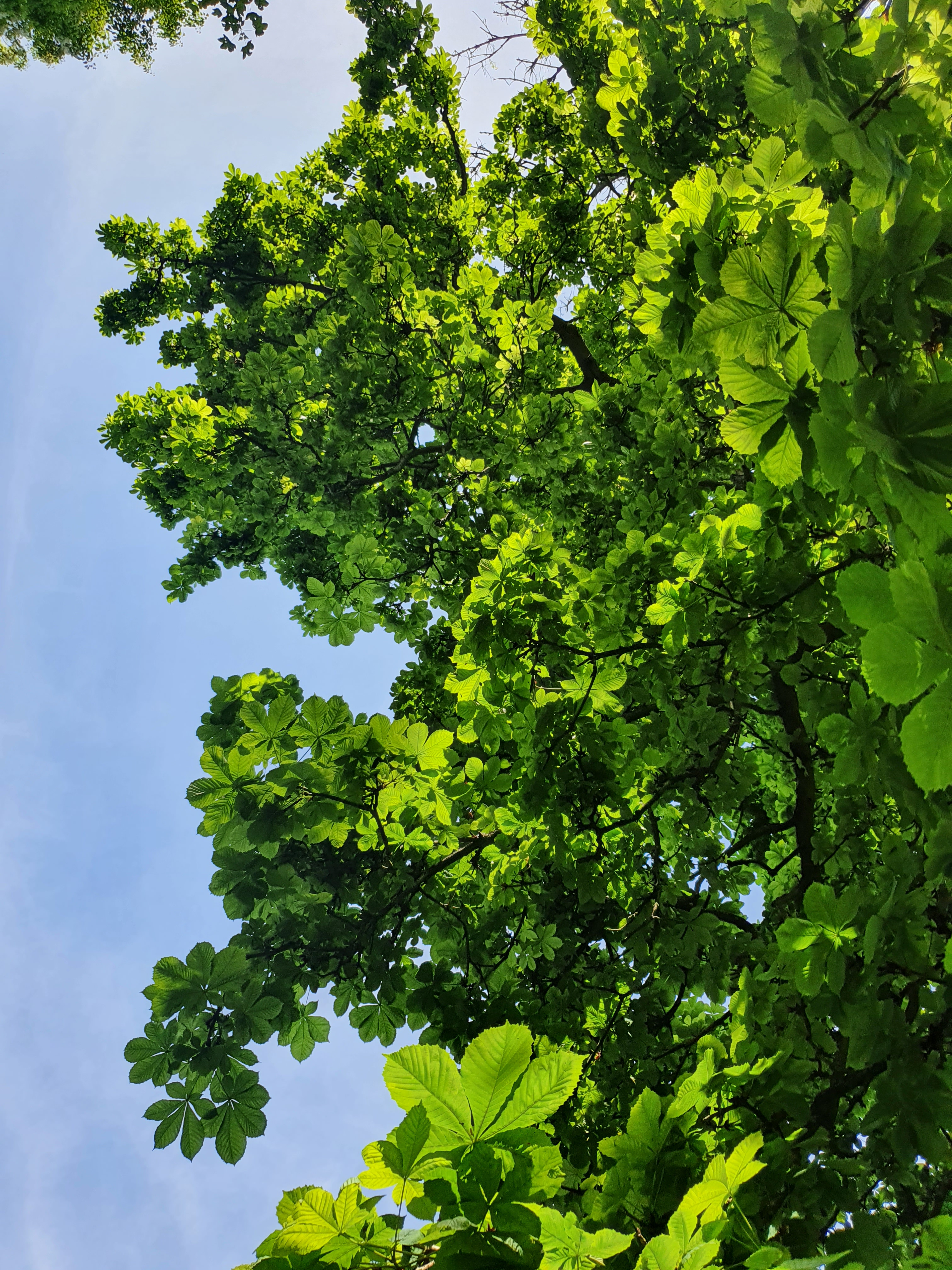
We wandered slowly (we always do, it’s why she’s the perfect dog for me to look after) and I looked up. I noticed the layers of the new leaves on the the horse chesnuts, I looked for the birds that I could hear but had little chance of seeing. Instead of chasing butterflies to photograph them I just watched their looping, fluttering flight, occasionally a territorial battle with a rogue enemy.
I think this change of perspective has been because my brain is feeling very overwhelmed at the moment, in addition to my usual cognitive symptoms. It didn’t have the processing power to find the little things. My eyes just needed to be gentle, to sit and rest on the wide expanse of blue and green space. And, well, in the moment, it worked. I’m going to need lots of rest to get me back fully functioning, but nature will always be there to help.
Have you noticed it? All along the verges, motorway central reservations, by the allotments and if you are very lucky in my book, in your garden. The acres of cow parsley, it reminds me of a huge pile of fluffy feather!
Even Glyndebourne has embraced it!
My first interaction with cow parsley, or if we are going to be technical, Anthriscus sylvestris, was gathering armfuls of it from the local park to use in my Guides flower arranging badge. I was the only one using “weeds”! And look where I am now!
I’ve always loved this point in spring when it starts taking over everywhere. And yes, it is a thug, it is very good at what it does and it doesn’t like anyone else at its party.
But, there are lots of things that are natural thugs, I’ve an aquilegia that is being quite a bully in my border at the moment!
This year though, I’ve stopped to really take notice of it. First of all, it’s at shoulder height so I don’t have to risk a dizzy spell bending down to smell it! Walk through a patch of it and you can’t help but breath it in. Once it’s caught your attention, it’s the delicate flowers that demand further observation. Each of the umbrells are made up of further individual flowers, all perfectly formed and held up by their own green stalk. I don’t think I’d actually noticed this before! Just like dandelion seed heads, nature’s engineering holds the flowers out ready to receive its followers (aka pollinators) on a wonderful platform.
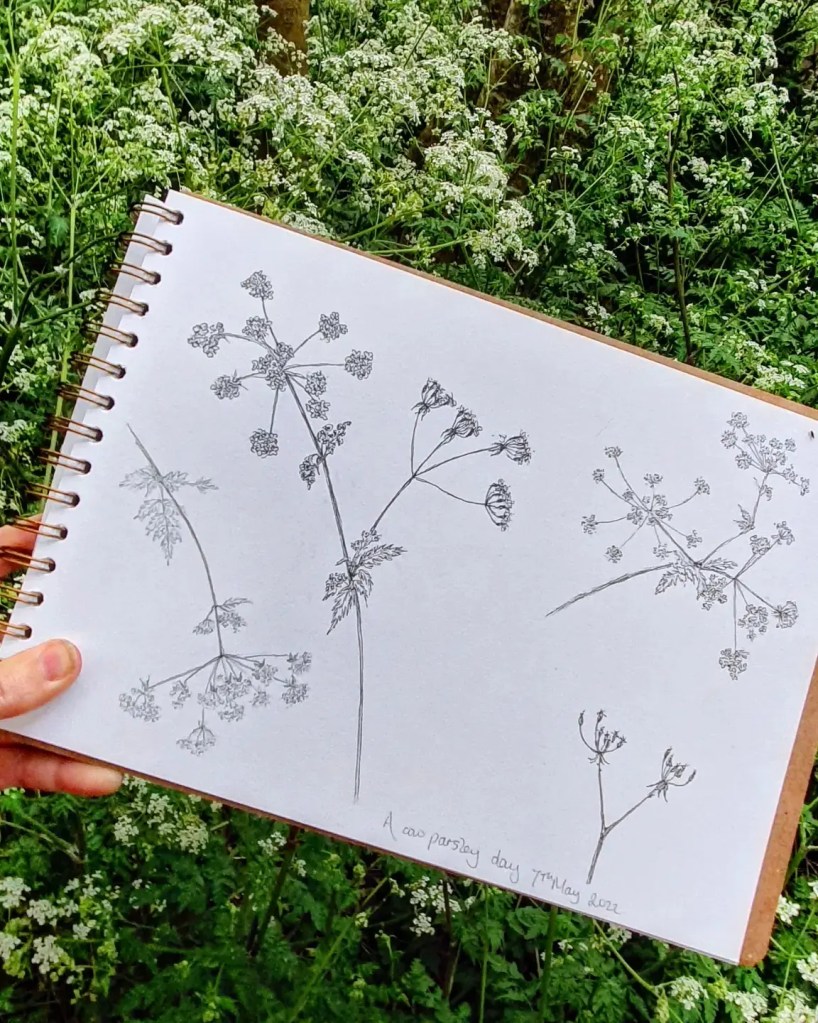
My parents have thankfully left some of the cow parsley in their garden, so I spent a wonderful day focused on these flowers. I sat and drew them.
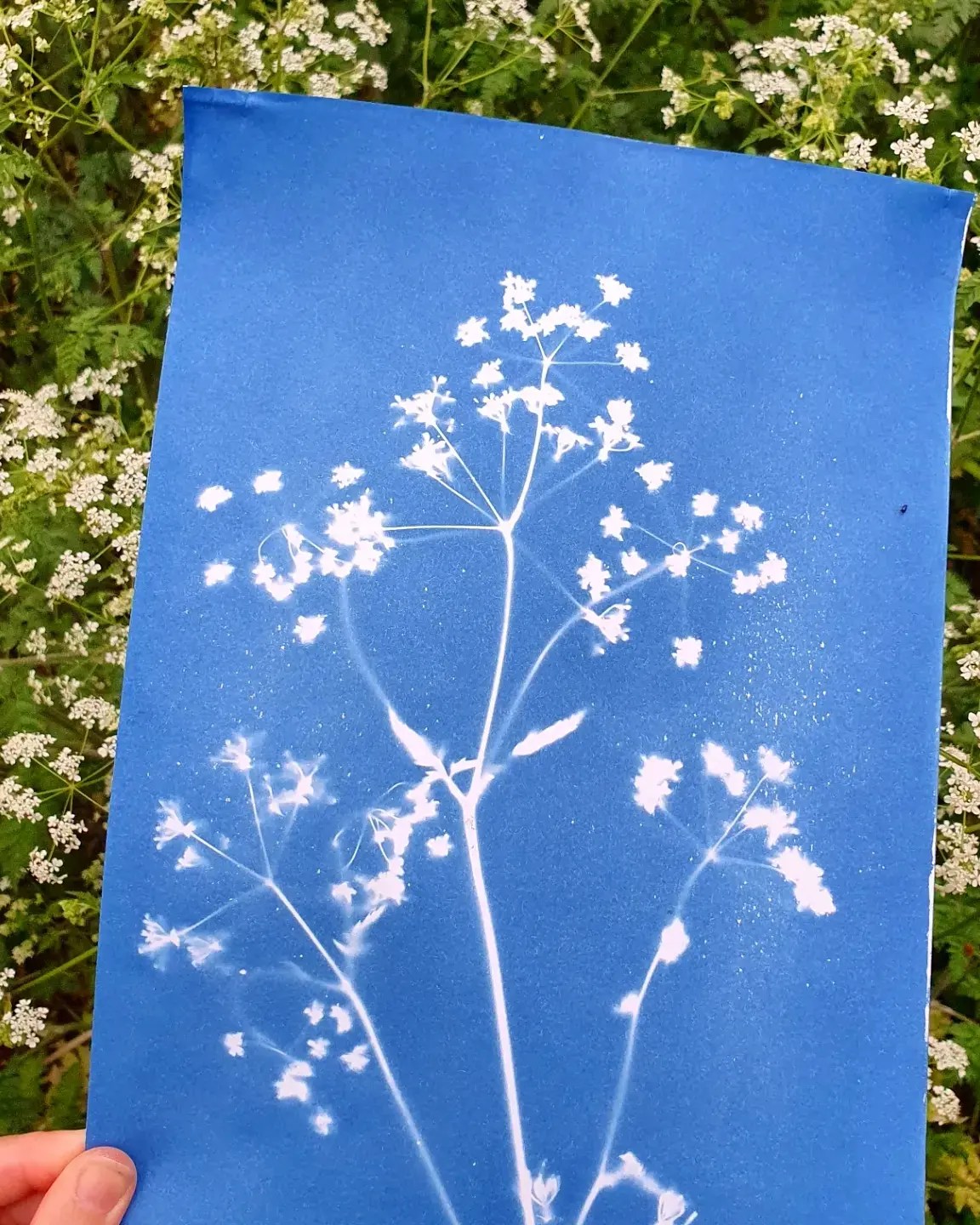
I made cyanotypes of them.
And now I’ve written a blog honouring then. I could go further into the science as to why these flowers are so amazing and how looking at plants such as this in particular are great for mental health (it’s because of the fractals) but others such as Emma Mitchell (@silverpebble) have written about it better than I can here.
I will finish by saying, during this micro season of cow parsley, do stop and smell them, look at them and marvel at their beauty. Just maybe not if you’re driving past them on the motorway.
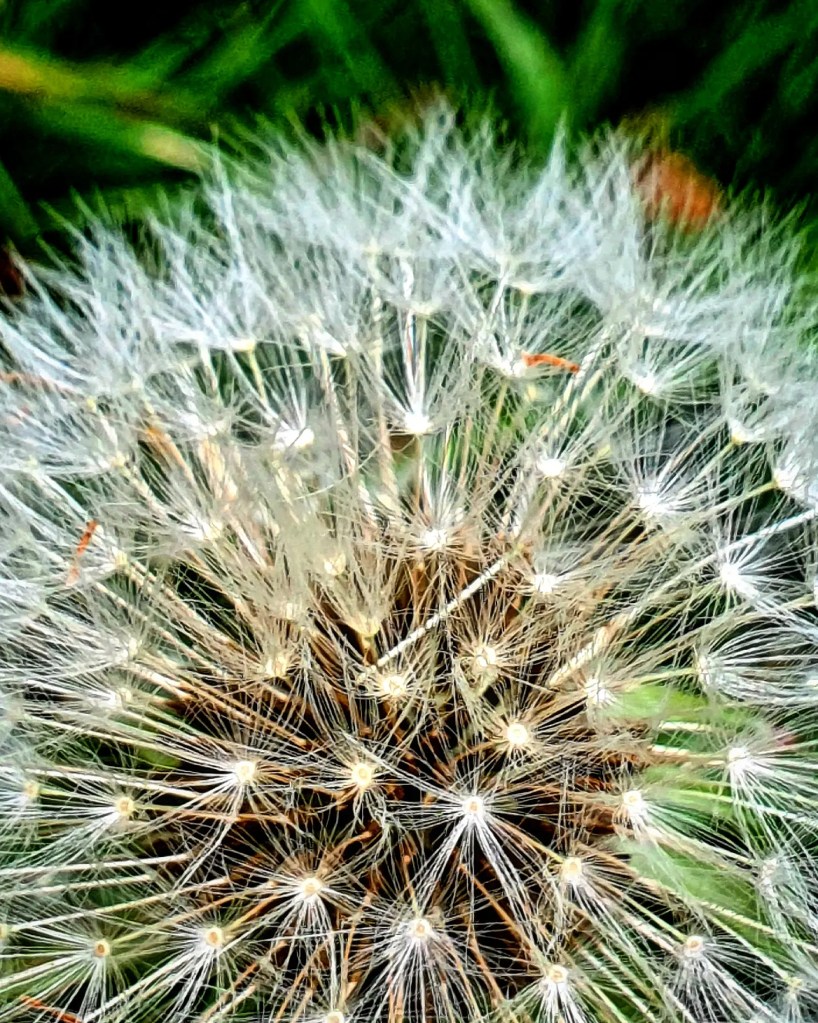
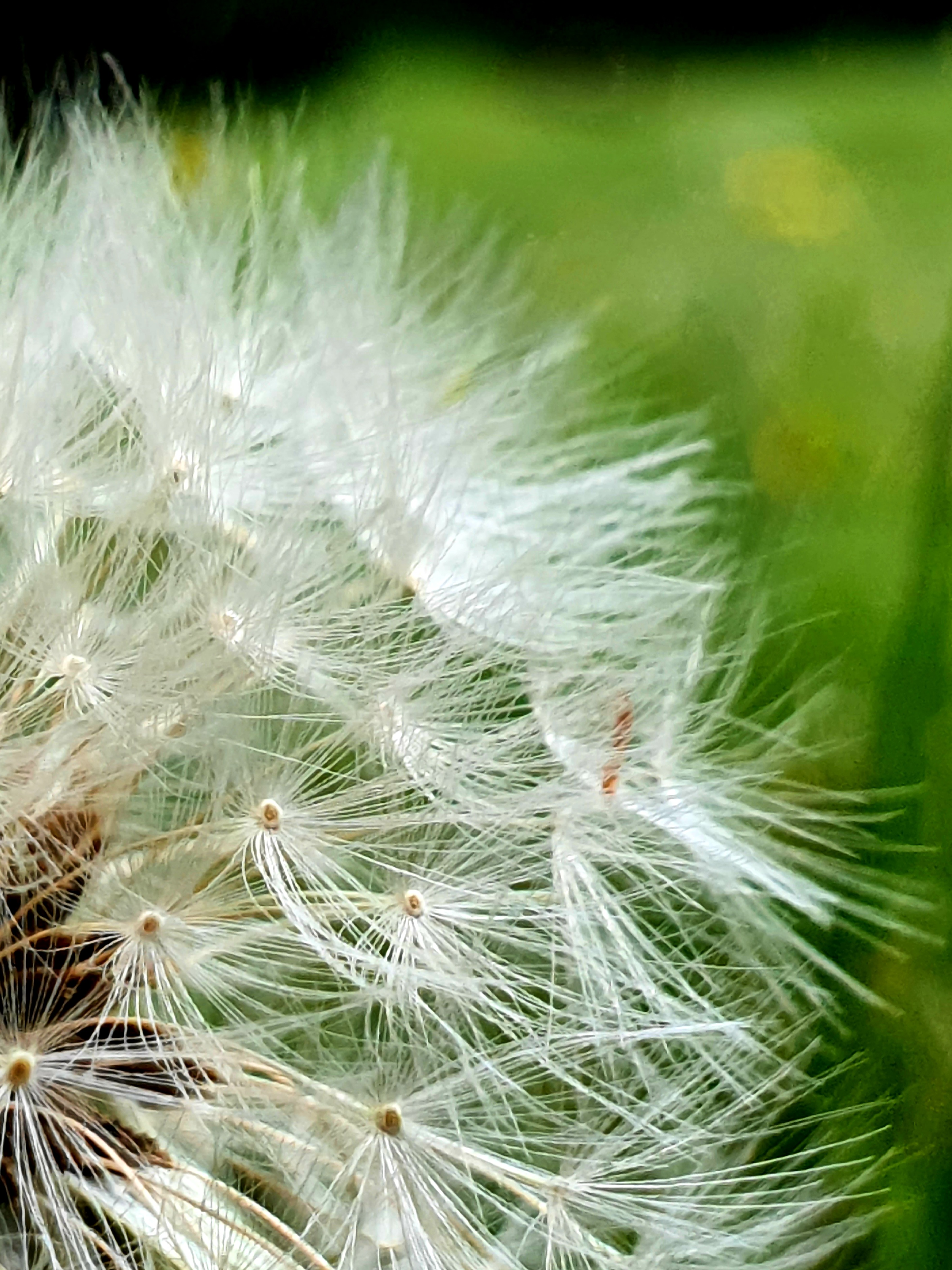
My current fascination is with dandelion clocks. Dandelions have had a lot of focus lately, saving them through no mow may, extolling their benefits to early pollinators, how if we hadn’t labelled them a weed, they’d probably be planted deliberately like similarly looking marigolds. And yes, this is all very important and there are plenty of articles and blogs out there about it and yes, please do leave some for the bees, they won’t take over your garden I promise.
But my focus is from a purely artistic and engineering angle. And not with their yellow petal phase, but the delicate seed head, childhood memory of blowing the clock off stage.
As I sat drawing amongst an expanse of dandelions, buttercups and speedwell on Beltane, I realised how utterly amazing the engineering of a dandelion seed head is. How each individual seed’s helicopter wings are the same size, and then they all perfectly nestle up against their neighbours to create that perfect sphere.
I’m sure you’re thinking, well yes, obviously, otherwise how would it be a sphere. But have you actually stopped, crouched down and really looked at a dandelion clock? Looked at how the seed attaches to the stem? How each seed has its own place in the sphere? How each of the threads in the wing are so fine yet without them the whole thing wouldn’t work (I’m sure there’s a botanical name for this, I’ll look it up later! )
So, next time you see a dandelion clock, just have a closer look, maybe even take a photo. Even better if it’s been raining, with the droplets caught in the threads. It will be worth it, I promise.
Oh, and as an aside, apparently snails really like them too!
When I think of spring flowers, I think of white; snowdrops, blossom and yellow; verges of daffodils.
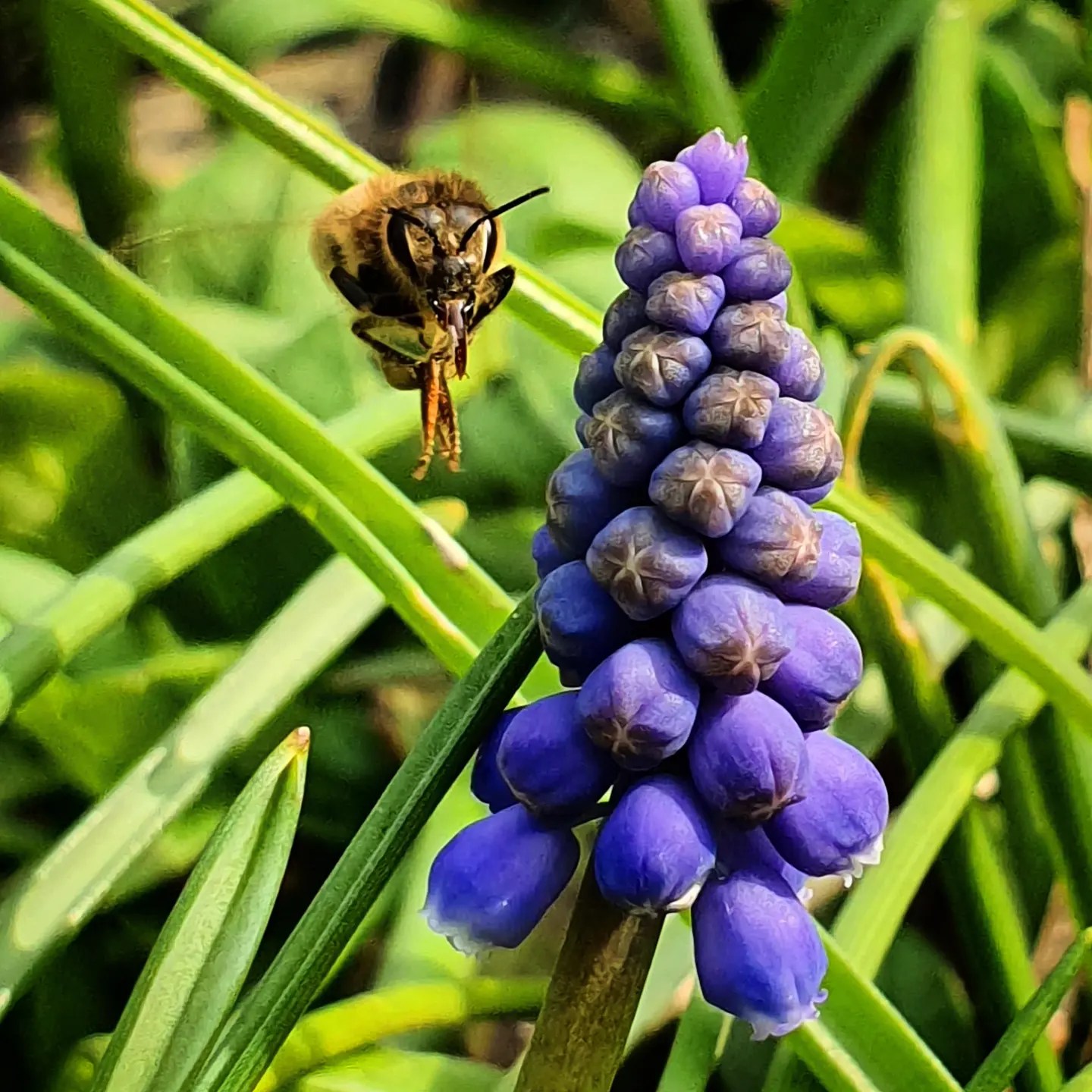
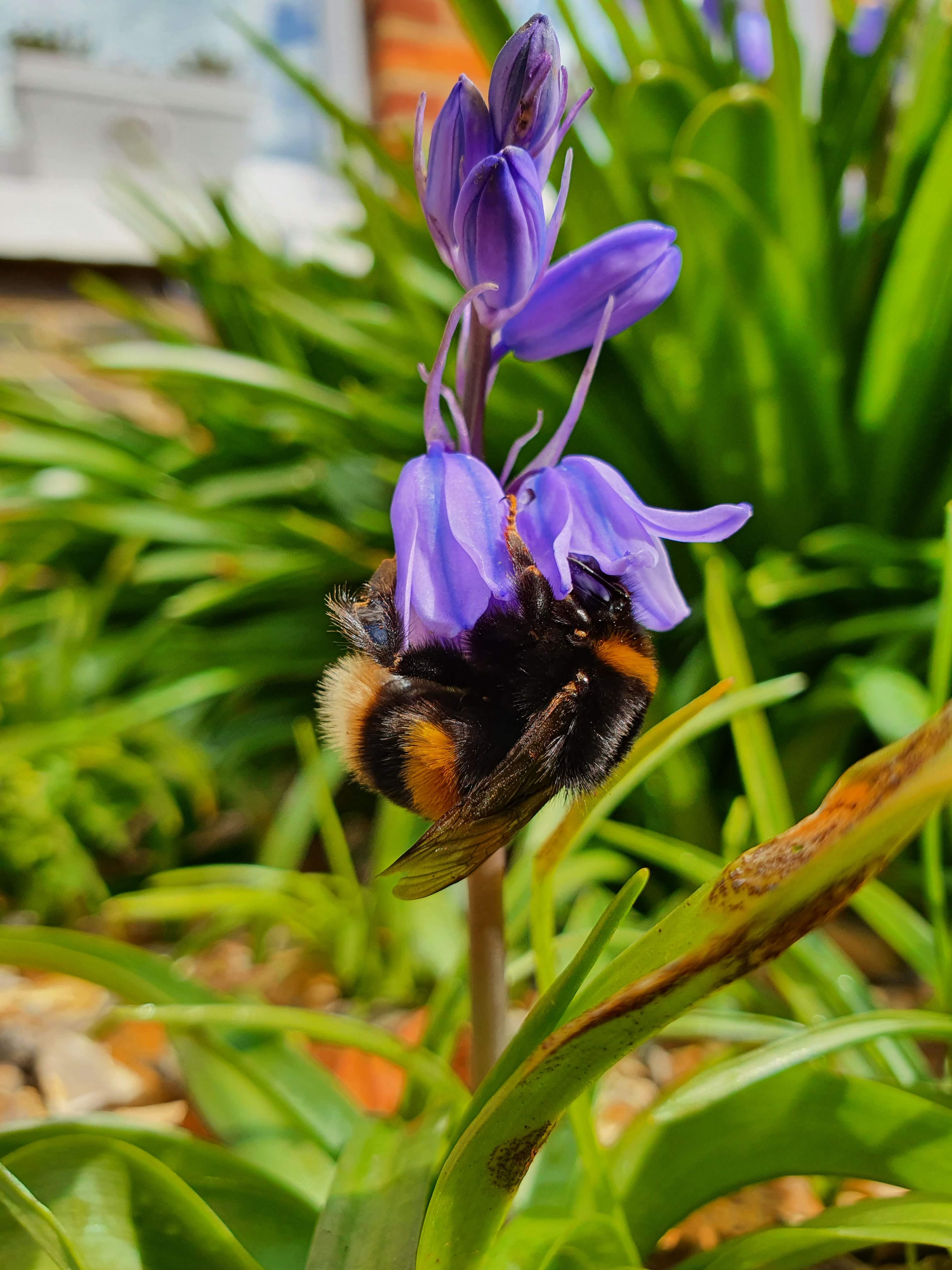
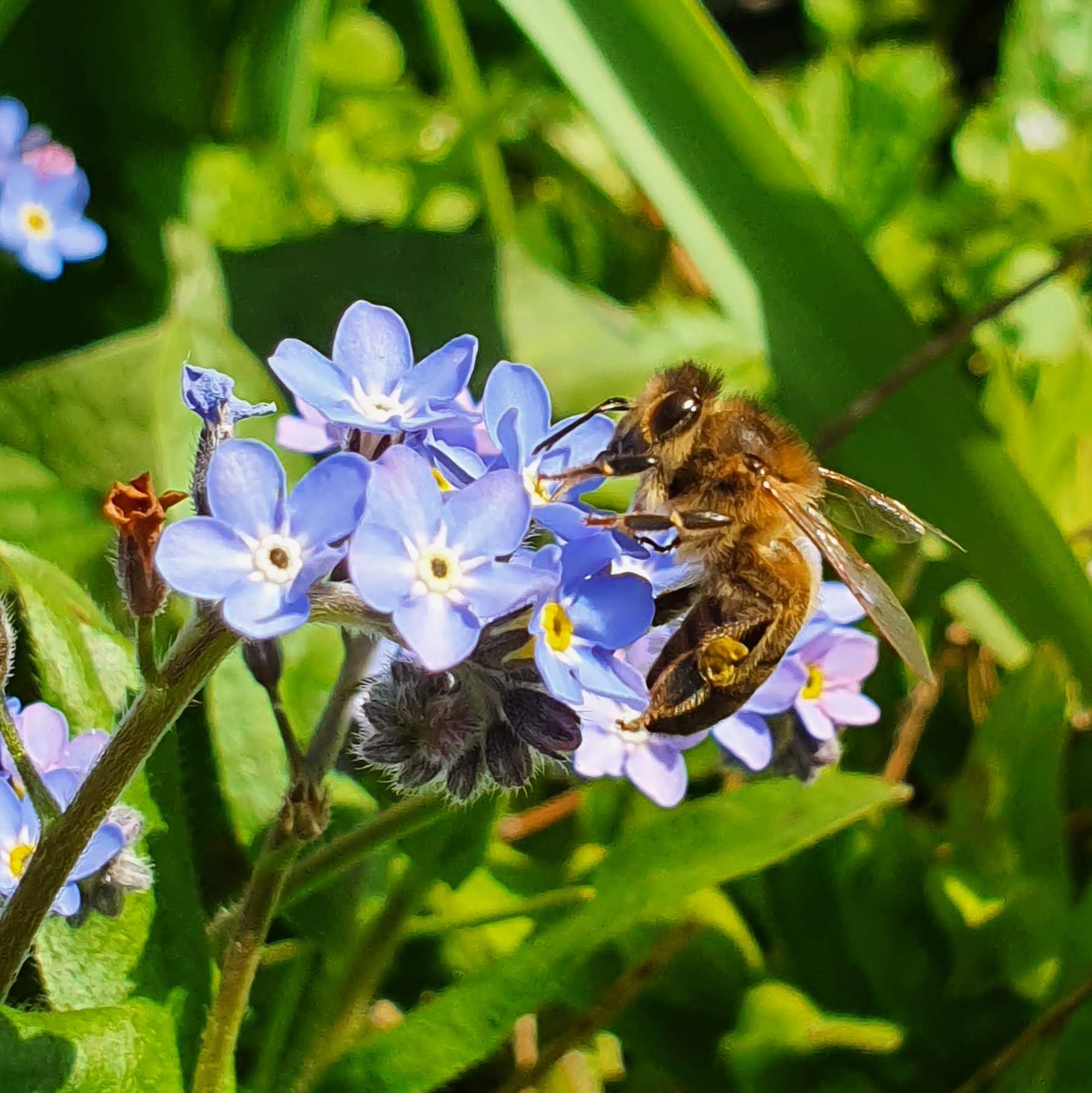
But this spring, where I’ve spent quite a lot of time in my garden, I’ve realised the colour of my garden in spring is blue; first grape hyacinths, then bluebells in the front garden, and now swathes of forget-me-nots.
It’s not deliberate! Over the years I have planted daffs, and crocus and do have a couple of tulips, but my northerly aspect and small size (garden not me) means my garden resembles a dark, damp bog from November to March, so spring bulbs don’t seem to do very well.
As you can see from the photos though, the pollinators don’t seem bothered by the limited colour palette and are quite happy for me to photograph their fluffy bums while they stick their heads in the blue blooms. And so I’m happy too.